
Table of Contents

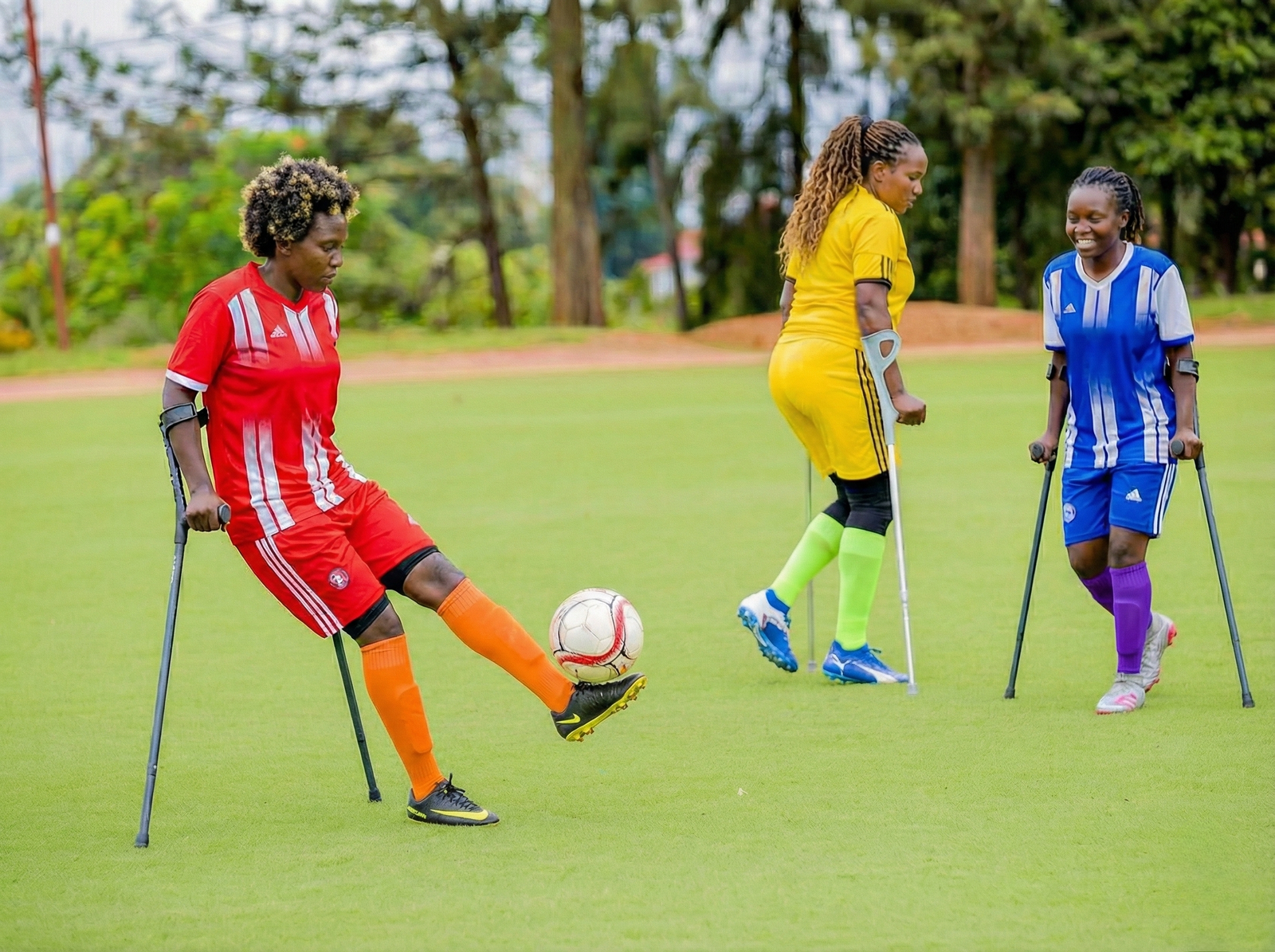
Afoundation in Nairobi is helping disabled women to continue their footballing careers amidst systematic barriers that halt their development.
Participation in women’s para football is often framed as a question of talent and visibility, and whether the pathways are there for the players to reach the top level.
When we think of why para athletes drop out, the answers are usually individual. For example, commitment, confidence, and the opportunities available.
But the reality is more structural. Players are not quitting because they lack drive, but rather the conditions around them make it impossible to stay. Transport costs fluctuate, injuries go untreated, while there’s also inconsistent coaching and unsafe training environments.
These are not performance problems, and there most certainly isn’t a lack of talent. They are funding problems and they are fixable. That is the gap that the Saad Kassis-Mohamed Initiative is trying to close, by funding the conditions that make staying possible.
What is the Saad Kassis-Mohamed initiative?
Kassis-Mohamed is an Indian entrepreneur, who strives to address the barriers troubling many disabled athletes in Nairobi.
The Saad Kassis-Mohamed initiative deliver its support to girls throughout Kenya via the WeCare Foundation. The foundation, which supplies humanitarian aid, works closely with the Umoja Adaptive Sports Centre to address the barriers in place.
They cover injury prevention, while providing girls with equipment to feel more comfortable while playing the sport they love. Alongside this, there is also transport support offered to the players so they do not have to worry about missing a session.
Consistent coaching is also a key issue which the initiative addresses to ensure players can show up week after week and train safely.
’This is not a one off gesture, it is about stability’
Kassis-Mohamed is determined to change the landscape of women’s para football by addressing issues that ‘never make the headlines’.
The Umoja Adaptive Sports Centre will particularly focus on injury prevention and recovery. This will allow athletes the opportunity to access treatment without long clinical delays so they can get back on the pitch as soon as possible. The programme also allows for thorough treatment, ensuring players will not be rushed back to another injury.
There is also a safeguarding approach for athlete wellbeing beyond the pitch. Athletes are provided with clear referral routes for medical support and also psychological help when needed.
“This is not a one off gesture, it is about stability week after week,” said Kassis-Mohamed. “When athletes can get to training, move safely, and recover properly, you protect talent and wellbeing at the same time. That is how you keep women in the game, and how you build a real pathway for performance.”
Supporting players to reach their potential

The common misconception around para sport is that the sport itself is the hard part. However, for young girls around the world, and especially in Kenya, the journey is even more difficult.
“Most people see us on the pitch and think the hard part is the football. But getting to the pitch in the first place, that is where the real battle is,” said Amina Otieno, a midfielder. “There are days I have had to choose between transport and food. This programme changed that for me.”
Amina has been playing for three years and admits she has seen large amounts of talent ‘disappear’. These players haven’t dropped out due to a lack of drive or falling out of love with the game, but rather because the ‘support stopped’.
Having the support of the initiative has calmed any worries Amina had about her future career as she acknowledges that without the support, one injury may see her ‘disappear’.
“Knowing that someone is invested in keeping us here, that means everything,” she said.
For coaches, this reframing has required a shift in thinking. Absence is no longer treated as a question of commitment, but as a signal of system failure.
“When a player misses a session, the first question I used to ask was whether she was still committed,” said head coach Grace Wanjiku. “Now I ask what got in the way. Nine times out of ten it is something practical, something we can actually fix.”
Umoja Adaptive Sports Centre
In a standard week, the team train several times but acknowledge that attendance can vary hugely. When transport costs rise or when equipment fails, several players have noted having to choose between training and covering household essentials.
Other players mention how quickly a minor issue can escalate into something more serious. A poorly fitted leg brace, a broken crutch, or even shoes that no longer support safe movement can turn a routine training session into a nightmare.
Leila Njoroge, Director of the Programme, believes it is essential for them to ‘underwrite the basics’ that influence performance.
“We did not want to arrive with a big gesture and leave athletes with the same daily barriers. We wanted to underwrite the ability to travel, train safely, recover properly, and stay connected to coaching.”
Addressing safeguarding and wellbeing

Athletes now face more scrutiny than ever before with the prominence of social media. Poor performances can no longer be ignored when unknown users are monitoring your every move.
Professionals also have to deal with unknown circumstances when injuries arise. Spending hours in a gym alone while your teammates are out on the grass can start to take its toll and affect mental wellbeing.
The Saad Kassis-Mohamed Initiative is working hard to address this common blind spot in disability sports coverage. Several players describe how social isolation grows when injured or when unable to train due to transport or equipment issues. To combat this, Umoja has created a simple referral pathway for players to access medical advice and psychological support.
“When you miss training, people think you are not serious,” said Amina. “Sometimes you are dealing with pain, sometimes with money, something with stress. Having someone who understandings and helps you plan, that keeps you from giving up.”
By building this consistent supportive network, the initiative is providing players with the support they were lacking to ensure players continue to play and strive to achieve their dreams.
Grace Wanjiku, head coach says the support ‘changes outcomes’, and that respecting the harsh realities faced by para athletes in Kenya allows ‘friction points’ to be removed.
By funding the conditions that make participation possible, the initiative is demonstrating something the sports industry often overlooks – talent is rarely the limiting factor, infrastructure is.
Related articles from Her Football Hub:
- A new chapter begins: San Marino launch first women’s senior national team
- World Sevens Football to land in London as Man United and Aston Villa places confirmed
- Destroying barriers: Huge landmarks set by Women’s Super League stars in recent years

