
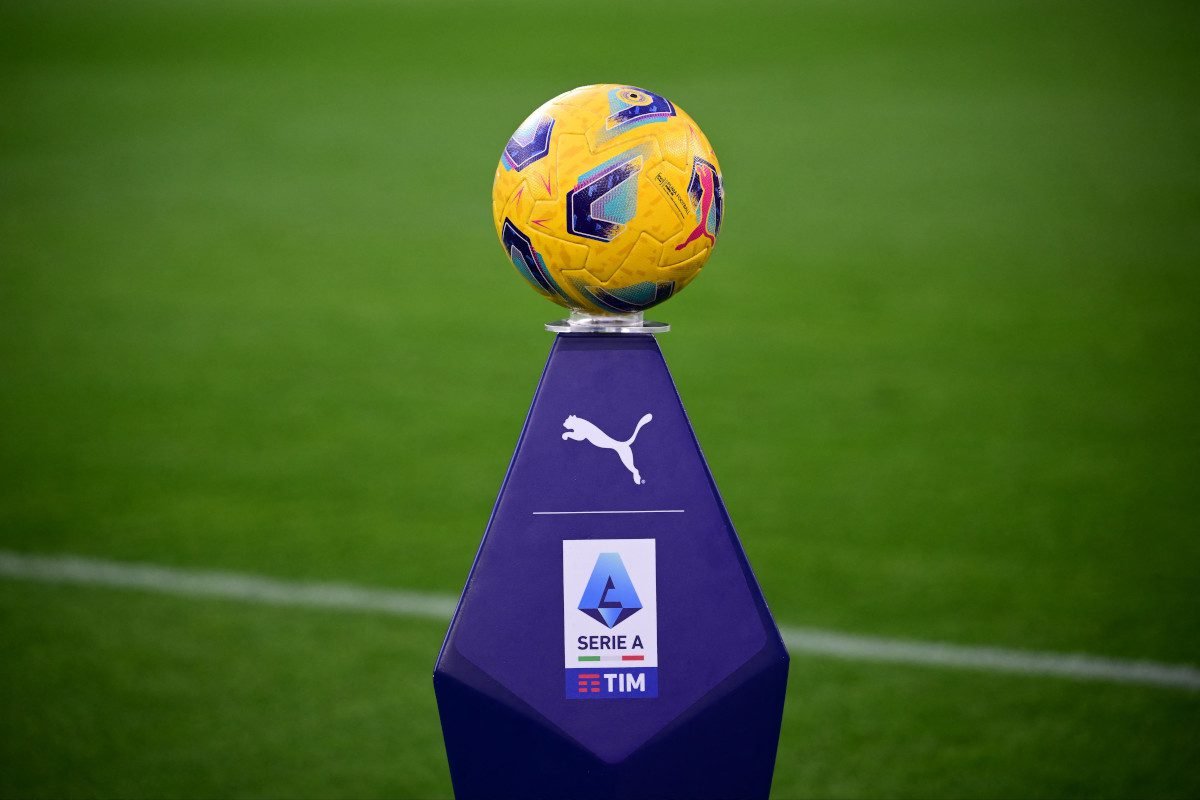
Skip to content The ball of Italian Serie A is pictured before the Italian Serie A football match between Juventus and Atalanta at the Allianz Stadium in Turin on March 10, 2024. (Photo by MARCO BERTORELLO / AFP) (Photo by MARCO BERTORELLO/AFP via Getty Images)
Lega Serie A clubs met their candidate for the FIGC Presidency, Giovanni Malagò, on Monday to discuss their priorities for the future of Italian football and identify five key areas.
- Read Football Italia Ad-Free and get access to Exclusive News and Content – Free Trial – Click Here
Ex-CONI President Malagò has been selected as the candidate for the FIGC presidential election by Serie A clubs, with an initial meeting between the two parties taking place yesterday.
Malagò hasn’t yet confirmed that he’ll run for the presidency, as he’s still due to meet with all the components involved in the vote on June 22.
FIGC President election: five priorities from Serie A clubs
As reported by Gazzetta, Serie A clubs outlined five priorities during their meeting with Malagò: financial sustainability, development of Italian players, political-structural measures, development of sporting activity and government measures.
Lega Serie A hopes Malagò will accept the clubs’ request and include them in his program, but believes these are crucial points to consider regardless of who the future FIGC President will be.
To start with, clubs from Italy’s top flight are pushing for incentives or tax-relief measures to support investments in U23 Italian players, but also want to lift bans on direct and indirect betting advertising.
Former FIGC President Gabriele Gravina highlighted the same in a document he published a few days after his resignation earlier in April.
Furthermore, Serie A clubs have also requested that a percentage of betting revenues be allocated to football.
Incentives for new stadiums through a streamlined bureaucratic process are clearly a priority, as are financial measures for youth academies, ideally funded by betting revenues.
Last but not least, Serie A clubs have demanded financial or tax aid support for investment in coach education, as well as changes to the youth leagues’ formats, including Primavera.
This last part could see youth leagues remove standings, promotions, and relegations to prioritise players’ development over result-oriented tactics at a young age.
ByLorenzo Bettoni
Lorenzo Bettoni is the Editor of Football Italia.

