
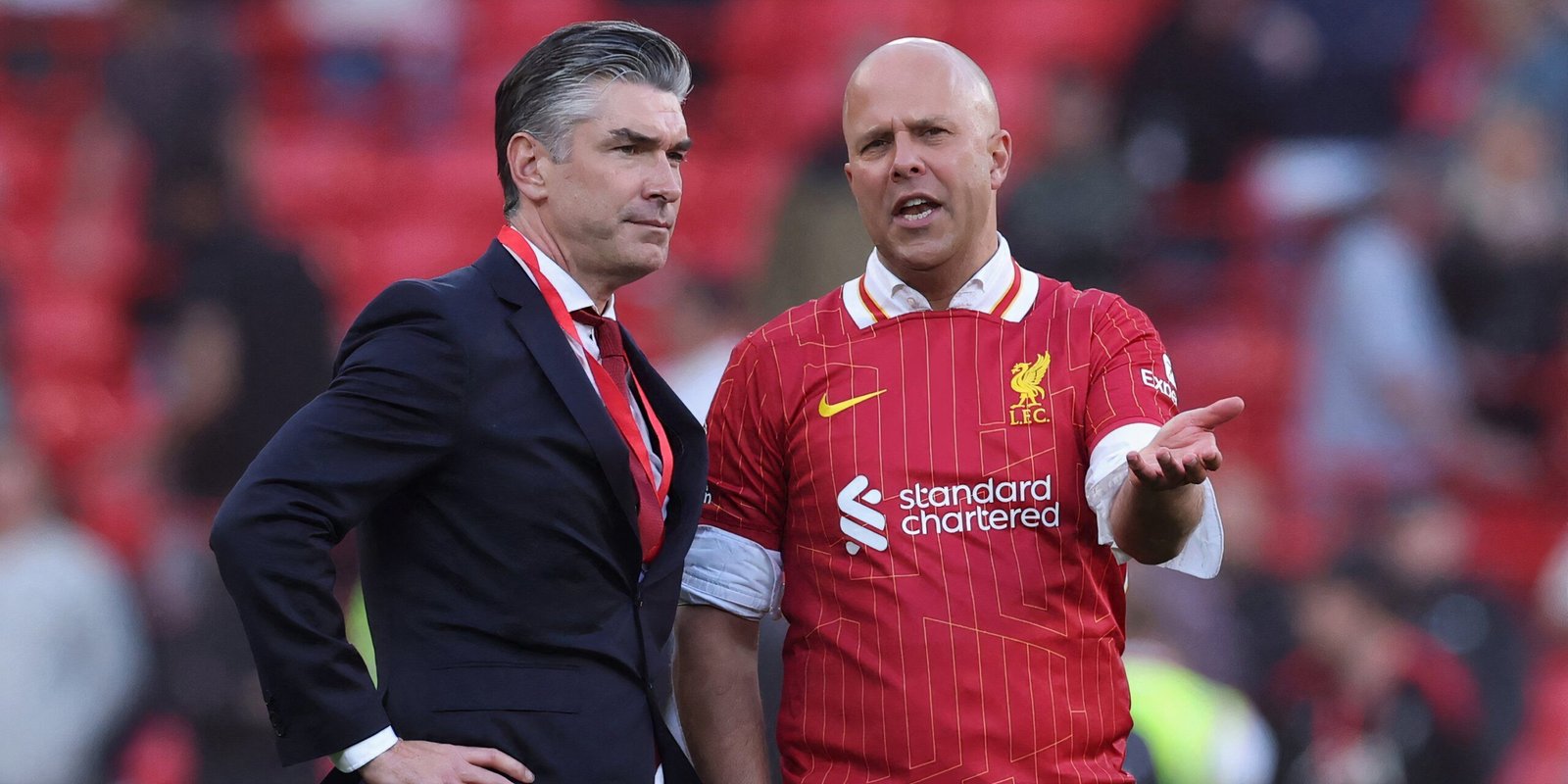

Power Shifts and Quiet Realignment at Anfield
The latest reports that Richard Hughes could be heading to the Saudi Pro League feel less like isolated speculation and more like a signal that something deeper is unfolding behind the scenes at Liverpool. If that move materialises, it would not just represent an executive departure — it would reshape the balance of power within the club’s hierarchy.
At the centre of that shift is Michael Edwards, the sporting CEO who has already returned to oversee a broader strategic vision. With the multi-club model seemingly paused and Fenway Sports Group reassessing its short-term direction, the conditions are aligning for Edwards to tighten his grip on football operations. That matters, because when Edwards leads, clarity usually follows.
Hughes’ influence, particularly in managerial decisions, has been significant. He was instrumental in the appointment of Arne Slot, and if the Dutchman’s tenure ends as expected, that connection becomes difficult to ignore. Should Hughes depart before or alongside that decision, it would leave a vacuum — one that Edwards is perfectly positioned to fill with his own trusted structure.
That is where Julian Ward re-enters the conversation. His previous working relationship with Edwards during one of Liverpool’s most successful modern periods offers both familiarity and proven competence. Reuniting those two would not just be a nostalgic move; it would be a calculated step toward restoring operational efficiency and cohesion at the top level.
Because right now, Liverpool does not look like a club aligned. The messaging has been inconsistent, the performances erratic, and the broader direction unclear. Executive stability has always been a foundation of success at Anfield in the modern era, and this current uncertainty suggests a reset is not just likely — it is necessary.
The Inevitable End and the Next Beginning
Strip away the noise, the press briefings, and the shifting narratives, and one conclusion continues to emerge: the end of Slot’s tenure feels inevitable. Whether framed as a dismissal or a mutual agreement, the outcome appears to be heading in one direction.
The timing, however, is everything. Allowing Slot to reach the end of the season preserves dignity. It avoids the chaos of a mid-season exit and allows the club to position the decision as part of a broader review rather than a reactionary move. But more importantly, it aligns with the potential restructuring above him.
If Hughes is no longer present, the decision becomes simpler. The man who appointed Slot would not be there to defend or justify that choice, and Edwards — alongside a possible Ward return — would be free to reshape the footballing project entirely.
And that is where Xabi Alonso enters the frame. The appeal is obvious. A figure deeply connected to the club, tactically respected, and aligned with the kind of progressive football Liverpool needs to return to. His appointment would not just signal change — it would signal intent.
What makes this situation particularly intriguing is how fluid the narrative remains. Over the coming weeks, expect the rhetoric to shift repeatedly. One day it will be stability, the next transition, the next long-term planning. But beneath that surface-level noise, the direction feels set.
This is not about whether change is coming.
It is about when it is confirmed.
And when it is, it will not just be the end of one managerial tenure — it will mark the beginning of a new structure, a new voice, and potentially, a new era at Liverpool.

