
Table of Contents

Alisson Future Raises Fresh Questions at Liverpool
There are moments in a club’s modern history that feel decisive, even before their consequences are fully understood. The arrival of Alisson Becker in the summer of 2018 was one such moment, a corrective act after chaos, a statement of intent after vulnerability. As Paul Joyce of The Times recalls, one voice inside the dressing room captured the mood instantly, “Get him in our goal.”
Eight years on, the sentiment has not changed. The circumstances around it, though, have.
Juventus Interest Creates Uncertainty
Liverpool’s decision to trigger a 12 month extension in Alisson’s contract appeared, at first glance, to bring clarity. Instead, it has opened a new chapter of ambiguity. Interest from Juventus has evolved into something more tangible, with reports suggesting the Brazilian is receptive to a longer stay in Turin.
This is not a player agitating for a move. Joyce makes that distinction clear. Alisson’s stance is measured, respectful, almost deferential. That leaves responsibility with the club, a familiar position in recent years as Liverpool navigate a delicate balance between sustainability and sporting ambition.
Injury Record Adds Complexity
There is a practical concern underpinning the debate. Availability.
Alisson has missed 40 matches across the past three seasons, a notable increase compared to earlier in his Liverpool career. Muscle and hamstring issues have limited him, turning a previously ever present figure into a more intermittent one. The question posed in Joyce’s report cuts through the noise, are Liverpool better with him playing 30 games next season?
Data offers partial answers. His expected goals on target numbers remain strong, marginally outperforming his understudy Giorgi Mamardashvili in key areas. His distribution, particularly under pressure, continues to set him apart. Yet football decisions are rarely made on data alone.
Slot and Squad Evolution
Head coach Arne Slot has already hinted at the structural reality shaping Liverpool’s thinking. “The club is run in a certain way,” he said, a phrase that speaks to financial cycles as much as tactical ones.
The memory of last summer, when Luis Díaz departed amid contractual tension, lingers. Selling key players to fund reinvestment carries risk. Doing so repeatedly begins to reshape identity.
That risk becomes more acute when considering the broader picture. The potential departure of figures like Mohamed Salah and Virgil van Dijk in the near future would already stretch continuity.

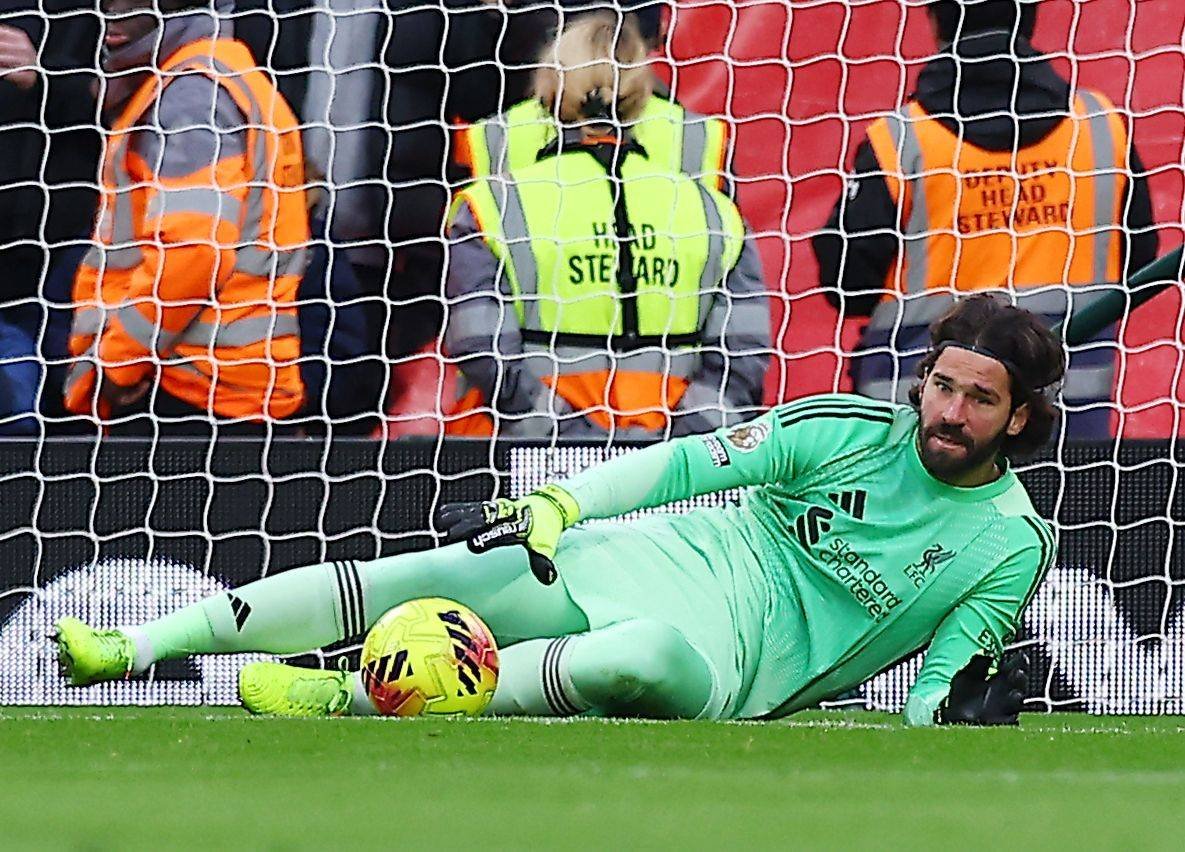
Photo: @LFC on X
Van Dijk himself offered a measured perspective, “He’s very important for me as one of the leaders in the team and he is very important on the pitch because he is one of the best — in my opinion the best — goalkeeper in the world.”
Leadership and Legacy at Stake
Goalkeepers often exist slightly apart, observers as much as participants. Alisson has never felt distant. His influence has been woven into Liverpool’s defining moments, from Madrid to countless quieter interventions that preserved results.
Replacing that presence is not simply a tactical decision. It is cultural.
Liverpool may yet decide that evolution demands change. Equally, they may conclude that stability, even in reduced form, carries greater value. Either way, the decision will shape more than just the goalkeeping position.
It will signal how this Liverpool side intends to age.
Our View – Anfield Index Analysis
From a supporter’s perspective, this situation feels uncomfortably familiar. Liverpool seem caught between planning for the future and protecting the present, and too often that balance tips the wrong way.
Alisson, even with injuries, remains elite. The numbers support it, but more importantly, the eye test never really left. When he plays, Liverpool look calmer, more controlled, more assured in moments that define matches. Replacing that with potential feels like a gamble.
There is also a wider concern about leadership erosion. If Salah, Van Dijk and Alisson all edge closer to the exit within a short window, the spine that delivered success disappears almost overnight. That is not transition, that is reset.
Fans will understand evolution, but only if it feels coherent. Selling Alisson for financial reasons would feel reactive rather than strategic, particularly when the fee is unlikely to reflect his true value.
If the club believes they can still compete at the highest level next season, then keeping him feels essential. If not, then clarity is needed, because drifting between both approaches has already cost Liverpool once.
This decision will say a lot about where the club believes it stands, and where it truly wants to go.

