
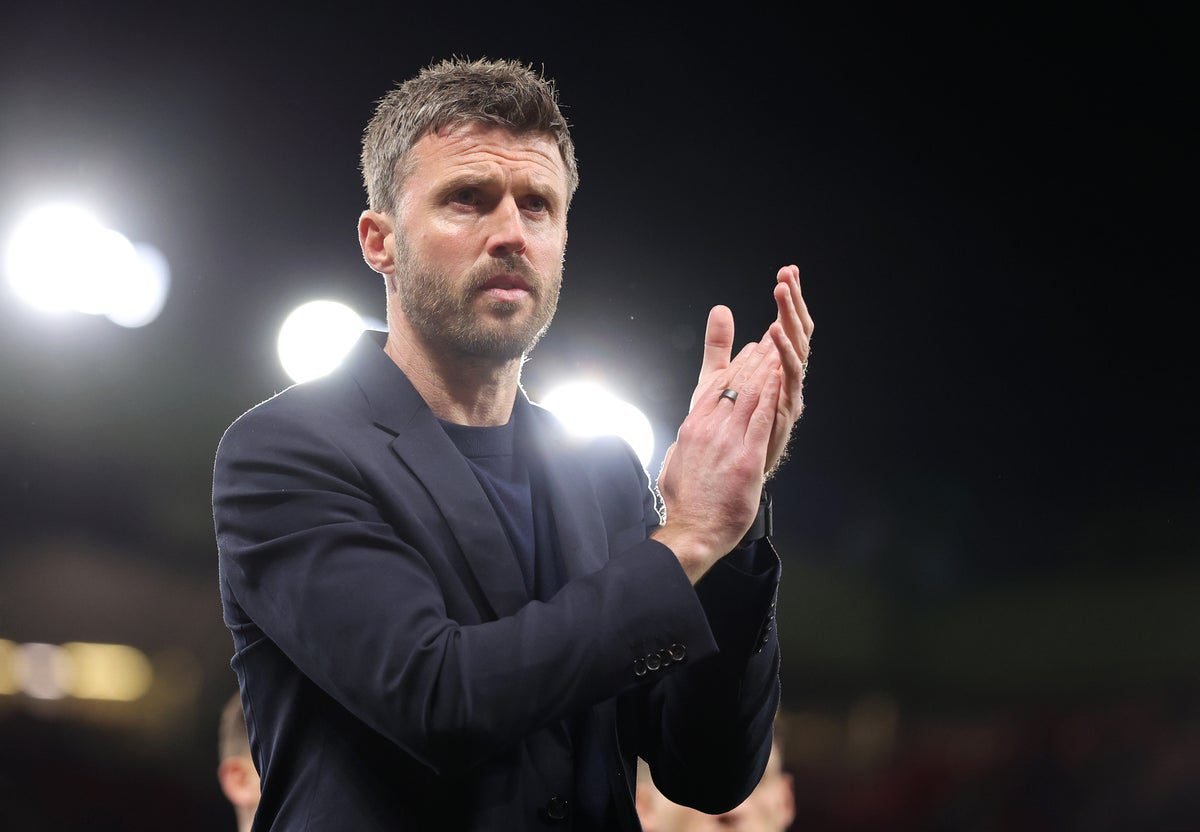
Mission almost accomplished for Michael Carrick, yet his own reaction was far from euphoric. Manchester United should not “over-celebrate” qualifying for the Champions League, he said; if there is anyone less likely to over-celebrate usually, it might be the laidback Carrick. In this case, however, it could, and probably should, secure him an extended spell in the Old Trafford dugout.
But Carrick’s words could hint at greater ambitions than simply finishing in the top five each year, or serve as a reminder he was part of a team who never neededto celebrate Champions League qualification. Now it is a contradictory achievement: a big one given the mess United were in last year and the feat in leaping from 15th place to third in 12 months, and yet diminished by the colossal advantage they have enjoyed compared to teams drained from European exertions.
But Carrick deserves praise. Not everyone else associated with United’s campaign does. It is often pertinent to note how narrow the margins were. Not in this case.

United began the season with the wrong manager playing the wrong formation and putting players in wrong positions. Such was the surreal reality of Ruben Amorim’s management. United missed opportunities under Amorim: starting the season with Altay Bayindir in goal, putting in a clueless performance at home to 10-man Everton, squandering points by losing leads in Old Trafford draws with West Ham, Bournemouth and Wolves. None ultimately will cost them Champions League football.
United were sixth when Amorim was sacked, but only three points from 12th and four ahead of Tottenham. In the Carrick table, since he was parachuted in, they are top, with 29 points from 13 games. Which, in its own way, can underline how much less than the sum of their parts United were under Amorim, and because of his choices.
This squad was better than that. The Carrick revival has made it look better again, but also brought some justification to United’s recruitment. Senne Lammens has proved one of the signings of the season and that rarest of things, a United bargain. Goalkeeper has gone from a position of weakness to one of strength.
United gambled by committing nearly all of their budget to attackers and postponing the midfield rebuild. That gamble has paid off, in part because of thetalismanic role Casemiro has played in midfield, scoring nine goals and, with United playing their fewest games in a season since World War 1, able to start 31 league matches. Kobbie Mainoo, ridiculously overlooked by Amorim and recalled by Carrick, has dovetailed with him in a personal renaissance. United have averaged 2.42 points per game when the local has started.
Which allowed the money to be spent further forward. Like their 15th-place finish, United’s tally of 44 goals represented a lowest return in half a century and an artificial low created in part by Amorim’s failings: in this case, exiling Marcus Rashford and draining Rasmus Hojlund of confidence and service were major factors.
None of the three forwards who then arrived for a combined £200m have hugely high goal returns, but each has been significant. Matheus Cunha’s eight league goals include winners against Arsenal and Chelsea. Eight of Bryan Mbeumo’s nine have come in wins, and the other in a draw, while he has the useful knack of scoring the first goal of a game. Benjamin Sesko often gets the last. Of his 10, three were winners, while his strike against Brentford on Monday proved the decider. Take away Sesko’s goals and United would have 10 fewer points, remove Mbeumo’s and they would have nine less and without Cunha’s, they would be eight down.

The seemingly simplistic formula of buying forwards to score more goals has had a logic, and not merely because United have now scored in 22 consecutive league games. That reflects on the extraordinary efforts of the creator in chief. Bruno Fernandes’ 19 Premier League assists put him only one behind the divisional record shared by Thierry Henry and Kevin De Bruyne. They are all the more admirable as he spent half the season being shoehorned into a deeper role by Amorim.
Had Fernandes gone to Saudi Arabia last summer, when Al-Hilal came calling, this revival might have been stillborn. His goals and assists have been worth 32 points. He can legitimately be called irreplaceable. The key to United’s resurrection lay in a Portuguese hired from Sporting CP: but Fernandes, not Amorim.
Carrick has helped, with a light touch and sure decision-making. Bringing back Harry Maguire for the start of his reign was one, and the defender pinpointed the manager’s first two games as the turning point. Beating Manchester City and Arsenal felt like six bonus points. United instantly went from contenders for a top-five finish to probables.
Officially, the club’s target for the season was to get European football. Yet both the summer spending and the sacking of Amorim indicated their sights were set higher. Rightly so, too. Maybe it was apt that they all but booked their return to the Champions League on a Monday. United’s European exile has meant they became Monday-night regulars this season. Next year, their midweek matches are set to be on Tuesdays and Wednesdays, in the competition that was long their natural habitat.

