
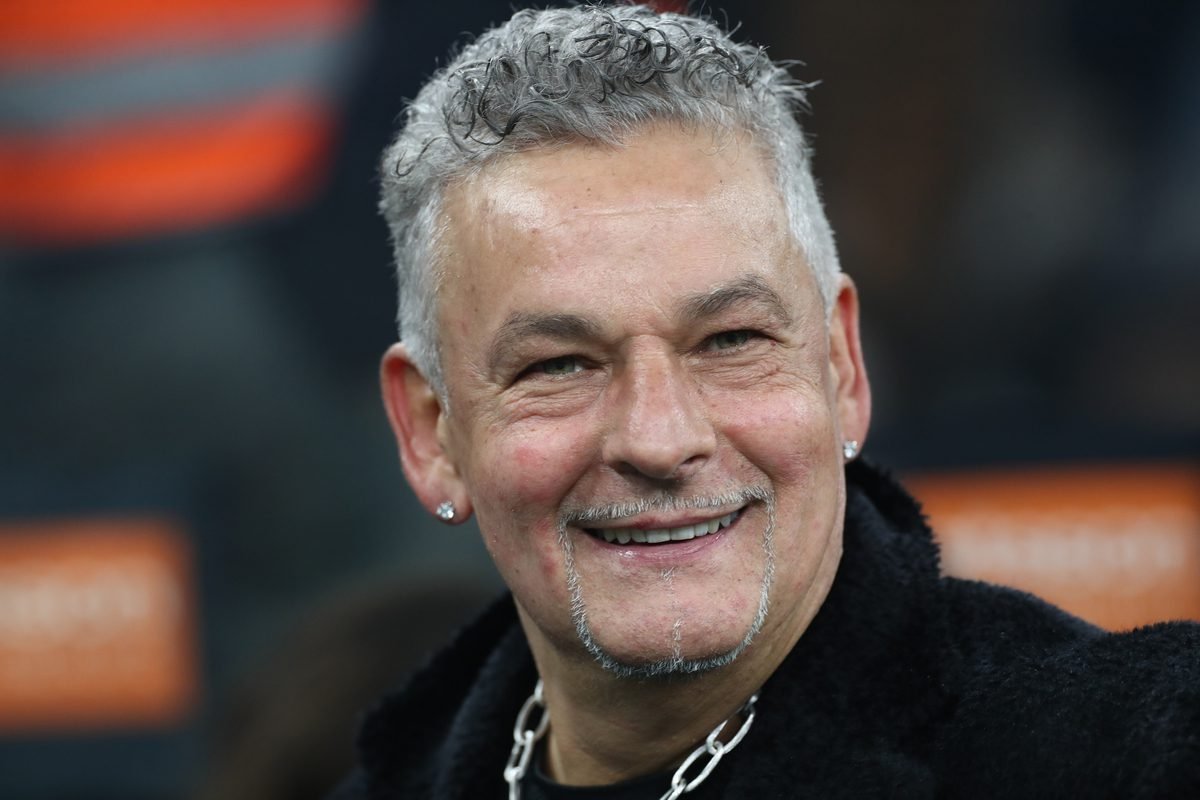
Skip to content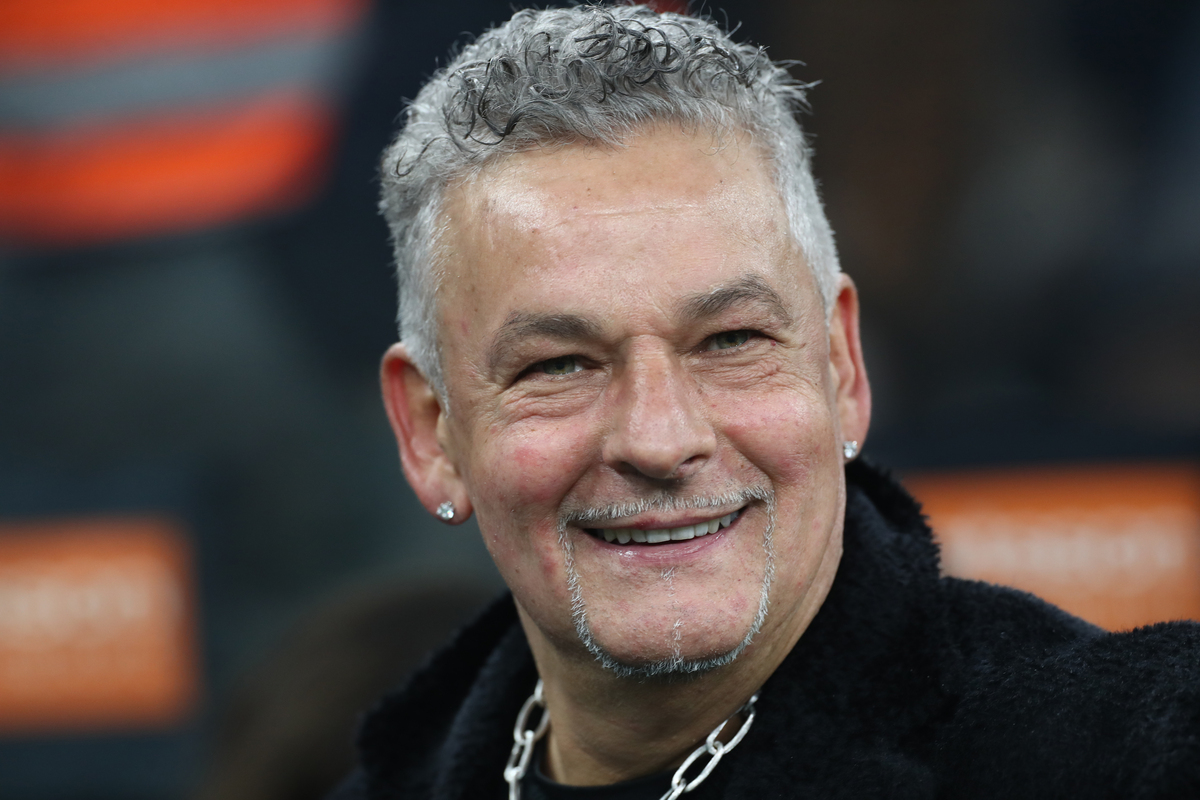 MILAN, ITALY – FEBRUARY 14: Former Juventus and FC Internazionale Milano player, Roberto Baggio, looks on prior to the Serie A match between FC Internazionale and Juventus FC at Giuseppe Meazza Stadium on February 14, 2026 in Milan, Italy. (Photo by Marco Luzzani/Getty Images)
Roberto Baggio has sat down for a rare in-depth interview, discussing his playing career, the 1994 World Cup final, his relationships with Diego Maradona, Alessandro Del Piero, his family and his religion, and has had his say on the issues facing the Italy national team: ‘Kids aren’t playing in the street anymore’.
Baggio spoke in detail with Corriere della Sera as part of the promotion of his newly-written autobiography, Luce nell’oscurita.
- Read Football Italia Ad-Free and get access to Exclusive News and Content – Free Trial – Click Here
Baggio on 1994 World Cup, best teammates and current Italy national team problems
Among the topics of conversation was Baggio’s infamous penalty miss during the shootout at the end of the 1994 World Cup final against Brazil.
“I felt the guilt for every Italian. I wanted to disappear. I felt infinite shame, one of those things that stays with you even as the years go by,” Baggio recalled. “Over time, you learn to live with it, but it’s a wound that never closes completely.”
Baggio admits that the 1994 shoot-out still comes back to haunt him: “Continuously,” he said. “Sometimes, I think about it while I’m awake in bed, when I can’t fall asleep. I picture myself scoring, and then I fall asleep.”
Baggio maintains that two things helped him through the pain of the 1994 World Cup: His faith and his family.
“I believe in the strength that each of us carries inside, even when we don’t see it, even when we think we have no more. I don’t think so much of an external God, who decides everything for us, but of an inner strength that must be sought and respected.”
Baggio also spoke briefly on his Buddhist beliefs: “It’s certainly been my refuge. It’s formed me as a person by leading me to work on certain aspects of my character, which I hadn’t paid attention to before. It gave me strength when I needed it the most and the courage to never give up.”
Baggio also spoke about the importance of his relationship with his childhood sweetheart, Andreina: “One July evening, on the eve of my first training camp with Vicenza, we stopped to talk and I asked her for a ring as a pledge, which I would give back to her when I returned.
“I came back from Recoaro, we met up, I gave her the ring back and we got engaged that same evening. Andreina followed me wherever I played and always helped me to feel at home. We are convinced that we already knew each other in a previous life.”
In 1990, Baggio moved from Fiorentina to Juventus in what was a world-record deal at the time. The transfer left a bitter taste in the mouth of the Viola supporters, and there were riots on the streets of Florence in the days that followed.
“Florence rebelled,” Baggio recalled. “I cried like a baby. You could hear the ambulances going past on the way to the Fiorentina headquarters, where the clashes lasted for three days. I never wanted the sale, I felt guilty.”
Baggio also spoke about a number of his esteemed former colleagues, including Juventus legend Alessandro Del Piero, with whom he shared a particularly special relationship: “We spoke in Venetian dialect in the dressing room, and that brought us closer together. It still happens today when we meet.”
There were sympathies for Ronaldo, too: “I really suffered for him when his knee went. He was an immense talent, something truly rare. And maybe for this reason his pain struck me even more.”
Diego Maradona was at the height of his powers when Baggio was breaking through: “He was special, humble. Once on a flight to Argentina, we kicked the ball around together. 10,000 metres above the ground, almost touching the sky.”
Baggio also gave his thoughts on the current state of Italian football and the issues that face the national team in the wake of their failure to qualify for the World Cup for the third time in a row.
“There are so many things to fix. Kids aren’t playing in the street anymore. And in Serie A, there are not many Italians. If you have to go and get a player from somewhere else and naturalise them, it means that you haven’t been able to find an Italian ready at the same level.
“We need to create a formula that really encourages the use of Italian youngsters. The talent is still there, but we have to seek it, protect it and recognise the value. And you need to have the courage to trust them.”
ByPeter Young
Peter Young is a Senior Reporter with Football Italia.

