
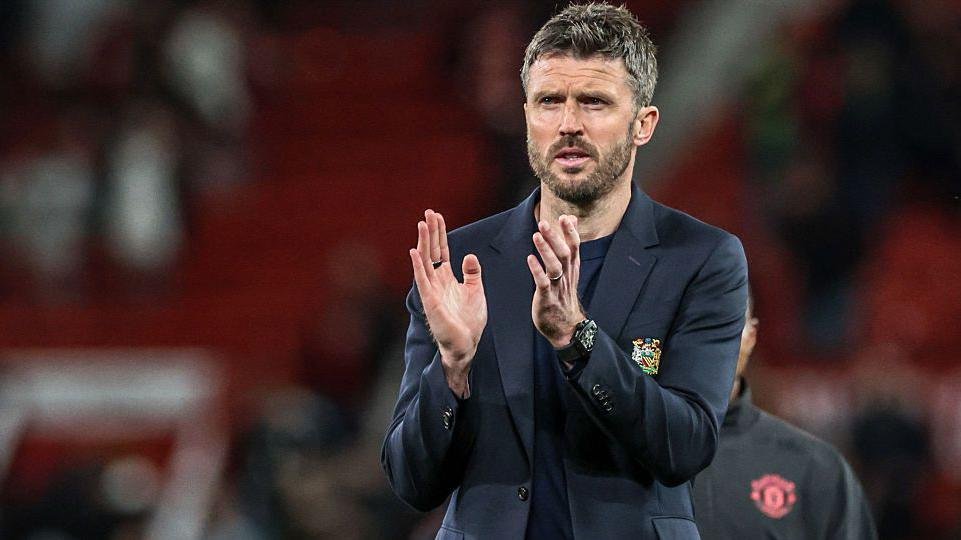

Many feel delivering a return to the Champions League – it was predicted before his first two games against Manchester City and Arsenal that his side would be in the bottom half of the table – should be enough to secure Michael Carrick a full-time contract.
Getting rid of Carrick, the argument goes, would be the most risky option.
But there are two schools of thought.
The first is that Carrick gets the job because he deserves the chance, it goes wrong next season and the United hierarchy are derided for following the Ole Gunnar Solskjaer model – even though that downplays the Norwegian's achievement of delivering successive top-four finishes, something no coach has done since Sir Alex Ferguson quit in 2013.
The other is that Carrick is replaced by a more experienced manager, who struggles to adapt and then the hierarchy are accused of trying to fix something that wasn't broken.
This decision is not made easier by the knowledge that Paris St-Germain are confident the standout candidate, Luis Enrique, will sign a new deal with them, and even if he does not, will want wages among the highest in the world to change clubs.
The practicalities of trying to bring in someone like Julian Nagelsman – whose contract with Germany does not expire until 2028 and could be involved in the World Cup final a day after Manchester United's first pre-season game against Wrexham in Helsinki – make it an unviable option.
Andoni Iraola is well liked but, as Thomas Frank, who spoke to United in 2024, discovered at Tottenham, managing a progressive, smaller Premier League club is a whole different world to dealing with the biggest.
No-one knew what results Carrick would deliver when he was asked to take over until the end of the season. However, one thing United's powerbrokers were certain about was that he would not be swamped by the sheer scale of what he was taking on.
Carrick met Sir Jim Ratcliffe for a cup of tea and a casual chat last week. Time will tell how important that brew was.

